Tuesday, July 25, 2006

Fireweed and Dead Children


When I was a child, in England, in the North, there was still fireweed growing among the scattered bricks of empty lots. Fireweed is often the first plant to grow after a fire or bombing. It is the scab that covers the wound, a filling in of the holes in the earth, where "death came in like thunder." It grows, too, in the Pacific Northwest, on scarred hillsides where fire has taken down the trees, leaving behind the charred skeletons of what was once magnificent.


The fireweed was a reminder. Even in the 1960s, it had been less than two decades since the countryside had been ravaged by German bombs. In many places, all evidence that the war had ever happened had been erased, but in the neglected North, the barren urban land, incapable of growing anything else, had covered itself with fireweed as a cloak against its hideousness.
I search for refuge from all of this. Perhaps I'm not entitled to refuge. After all, the bombs are not falling on my children, they are not destroying my homes, I am not of a people that another people has set out to eradicate from the face of the earth, so really, what the fuck am I getting all upset about? It is my own narcissism that tries to claim that the suffering all around me, that is around me but is not touching me, can justify my own helplessness and rage of the past, god, I don't even know how long anymore.


But I know this. The images of the past several years have torn craters into my memories, created sores that are inhabited by dead children, and bombed-out buildings, and by images of madmen and women who hasten us toward our doom. I have been walking around the past few days so sick to my stomach that eating has been a struggle. I come to various blogsites for refuge, to find camaraderie within a community, and what I find, again, and again, and again are people who want to throw bombs at one another, who seem to have no qualms about stating unequivocally that one position is right and the other is wrong.


I have always been frightened of fundamentalism. When one decides that one set of words is more important than any other set, that one does not have to listen to the words of another because that other language is wrong, well, all is lost.


When language fails us, what do we have left? Dead children. That's what we have left. Dead children and fireweed.

Friday, July 14, 2006

Interpreting the Horror

lucyfrag

How do we establish our solidarity with the dead and dying without appropriating their pain?


How can we on the Left proclaim our horror and disgust with the killing being done in our name, without resorting to the tactics of a power-mad White House that dared to tell us that the victims of 9/11 cried out for blood?


I do not think these are moot questions. Nor do I think them academic. They have arisen on this site in the past few days, and they are questions that I have long contemplated.

Who casts not up his eye to the sun when it rises? but who takes off his eye from a comet when that breaks out?

Who bends not his ear to any bell which upon any occasion rings? but who can remove it from that bell which is passing a piece of himself out of this world? No man is an island, entire of itself; every man is a piece of the continent, a part of the main.


If a clod be washed away by the sea, Europe is the less, as well as if a promontory were, as well as if a manor of thy friend's or of thine own were: any man's death diminishes me, because I am involved in mankind, and therefore never send to know for whom the bell tolls; it tolls for thee.


Neither can we call this a begging of misery, or a borrowing of misery, as though we were not miserable enough of ourselves, but must fetch in more from the next house, in taking upon us the misery of our neighbours.

John Donne


John Donne proclaimed that every person's death diminished the human continent. We all know the quotation, although most of us have not seen it in its full context. In the very next sentence, he begs the question: Is taking on the pain of others a begging of misery? He answered the question in the negative, although one could argue that he did it for selfish reasons. You see, understanding another's misery reminds us that our own lives are finite, and that if we are to draw closer to God, as Donne saw it, we needed to be reminded of that fact.


For those of us who are atheists, however, that reminder serves another purpose, perhaps. For me, it is a reminder of just how fragile all of us are, how fragile my children are and the other people whom I love, and how, for whatever reason, what is befalling my global neighbor is still of concern to me. Especially when it is being done in my country's name.


Many of us feel these feelings, and we have attempted to bridge the gap between us, we of the cars and plentiful food and relatively safe surroundings, and them, of the bombed-out homes and constant terror of being shot, raped, mutilated.


And so we try to tell their stories, to make them our own. But, in our desire to understand, do we diminish their suffering?


Do we dehumanize the dead when we tell stories about them, as if we knew them? Is it arrogance on our parts? To some readers, perhaps. For others, it is an opening into a life that allows them to feel the pain, indeed, to shed tears for the suffering. And in that it might move people to action, it is a good thing.


But is it redemption? Alas, no.


The dead may not be redeemed. The dead may not be brought back to life, restored to their families, resurrected in their original, perfect human bodies. They are dead. Gone.


When I was still an historian, this troubled me greatly. I read the horrific trials of women such as Matteuccia di Francesco, a young woman of Todi, Italy, who was tortured into making a confession of witchcraft. Her punishment? Death by fire.


One reads the confession of Johannes Junius, and his pain virtually cries out for his story to be told. What was his life like before he was carried away to the strappado, his arms dislocated and broken until he confessed to being a witch?


We cannot know. Sometimes, I used to weep that I could not tell their stories. Ultimately, it was one of the reasons I chose to leave the field. I could not bring these people back to life. I could not give them their lives back, somehow redeem their deaths of its meaninglessness. And the stories I told would be my stories, my interpretation of lives lost, my assumption of their identities in order to make myself feel better about what they had suffered.


I  could not do that in the field of history. But I could do as a writer. What is the purpose of art? Well, that's a dumb question as its answers are manifold and meaningless, too. But one purpose, so to speak, of art is to remind us of the human condition. To remind us that despite a myriad of cultural differences, there are similarities too.


This I know. It is a terror to be raped. It is a horror to lose a child.


It is a place to start from. If I cannot bring back to life the dead, I can not allow their deaths to pass in silence.


It is what the writers here do. We howl at the moon. We point our fingers. We publish those pictures to get people to feel, like a kick to the gut, the costs of war.


The other side does it, too. They put words in the mouths of the dead, but only our dead. Not the dead children. If you believe them, there are no children there. Only insurgents and criminals and terrorists.


So, perhaps it is up to us to keep pointing out the crying children, and trying to interpret their tears. It is our act of love and compassion and helplessness. It is our tears of rage.
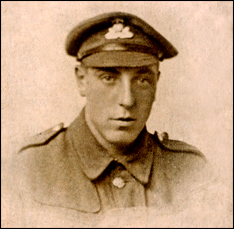

lorraine_pic.jpgThis is my great-grandfather. He died in 1917, in Flanders' Fields, in one of the most useless fucking wars ever fought. I know virtually nothing about him. My grandmother was a babe in arms when he was killed. Her mother died when she was nine. She knows virtually nothing about her father. There are no stories to tell.


There is just vast, ineffable silence about who Robert Raymond, age 25, of the Lancashire Fusiliers, really was.

In the distance, I hear a bell tolling.

Wednesday, July 05, 2006

Carnival of the Feminists at Ink and Incapability

The newest Carnival of the Feminists is up. There are scads of fabulous posts, and oddly enough, a little something by me.

The next carnival will be held at Figure: Demystifying the Feminist Mystique, so get your entries in soon!

Tuesday, June 27, 2006

Silly Limericks

There once was a junkie named Rush
Who had trouble exploring the bush
So he smuggled some pills
That would jack up his thrills
And wound up with a glove up his tush


Privacy, it seems, only applies
To those who are hired as spies
For the average bloke
Secrecy’s naught but a joke
So says the president who lies


This morning as I performed my ablution
I sought for myself some solution
To our troubles and strife
In this knocked around life
And I thought, maybe, ‘tis revolution

Monday, June 26, 2006

Don't call me Hysterical

grey_line

Shortly before I underwent a hysterectomy in November, I received an anonymous letter via e-mail. I had not been shy about my need for surgery. I am more than aware that my uterus is a political organ. I fear that just as SCOTUS has recently ruled that there's no need for a "knock-knock" before violating civil rights, so too, it will soon be permissible to enter a woman's vagina without her consent. Or, as the case is more likely to be, to tell a woman that she can't make decisions about what may or may not enter and lodge inside her uterus.

And so, knowing that the personal is political, to quote what was once a revolutionary statement but which seems to have lost its meaning, I chose to write about my decision, and my fear, in undergoing this procedure.

Thus, someone out in the blogosphere decided to send me a letter, under a pseudonym, in which they denounced my decision to be public about what I was about to undergo. In the letter, the person described to me how I'd been duped by the male medical establishment, how six months after my surgery I would begin to suffer the horrible effects of various blood vessels dying in my pelvic region, how I would feel like shit. And worse, this person pointed out, I would be responsible for the positive push I may have given other women to have the same operation done. That by talking positively about my decision to have my uterus removed, I was contributing to the ruin of other women.

All of this vitriol arrived just a few days before my surgery.

And so, given that it is now over seven months since my operation, I feel that I should check in with the world, and let other women know what the effects have been of having my political organ removed.

I feel fantastic. The condition that necessitated surgery was adenomyosis, a condition in which I bled profusely throughout the month. It was unpredictable, and frequently, in the middle of sexual intercourse, I would start hemorrhaging. I have never been squeamish about sex during menses, and I've been fortunate that I've had partners who were also not turned off by blood. So, the blood was not the issue. The issue was the constant pain, and the weakness caused by anemia. I felt sick all the time. My uterus was approximately the size of a 13-week pregnancy, and for someone who is tiny like me, it meant that my stomach bulged. Again, no big deal. But I felt permanently bloated.

We tried other therapies to alleviate the problem. They didn't work, and in fact, made things worse. One night, after having hemorrhaged for the entire day, and now, too weak to stand, a friend took me to the emergency room. My gynecologist came in to see me, and we decided then that there was no point in putting off the surgery. It was time to overcome my fears and do what was best for me.

My biggest fear about hysterectomy was about sex. And so, I want to talk frankly about that here.

I was deathly afraid that I would no longer be able to have orgasms, or if I did have them, that they would be pale shadows of their former selves. For me, orgasms build, and when they reach their crescendo, I feel contractions deep inside of me--intense, starbursts of pleasure that I had always assumed was the result of my uterus responding to the electricity racing across my flesh. How would I experience that level of pleasure if there was no uterus to contract?

I was haunted by the idea that I would lose a sensation that is of paramount importance to me. Perhaps it makes me shallow, this desire to feast at the full banquet of sex. But I believe that there are few things that are freely available to us, and for me, sex--both the connection I feel to another human being and the loss of boundaries I experience during orgasm--is an integral part of who I am.

I was terrified of losing that.

After surgery, one is advised not to have intercourse for six weeks. For the first couple of weeks after surgery, I felt awful. I lost a lot of blood during the procedure, and my iron level was down to 27 (normal is 42). So, I wasn't thinking a lot about sex. But, things started to wake up, and I decided to take matters into my own hands, so to speak. When the orgasm came--complete with the deep sensations of contraction and vibration--I wept. I wept. I called my closest friends. I shared my joy. I felt no shame in doing so. And, when I was able to resume intercourse, it was to discover that everything still worked. In fact, it worked better, as I now did not feel this sluggish, clogged-up sensation in my pelvis.

And life without periods has been interesting. I don't bleed, of course, but since I still have my tubes and my ovaries, I experience a normal cycle, complete with bloating, crankiness, and breast tenderness. Woohoo!

I realize that for many, this may be too much information. But I was open about having the procedure before I had it done, and I feel an obligation to let those who reached out to me prior to surgery know that I'm well. I'm fabulous.

I also want to say that there were women who reached across the internet to let me know that I would be okay. They shared their experiences with me privately. And I thank them for that. I may cringe when I see this posted, but I just want to reach out to those who may be in similar positions to the one I was in last fall and tell them: it's okay. It will be okay.

Friday, June 23, 2006

Quote of the Day

Taking such a broader approach to "life issues" would affect evangelical attitudes not only toward abortion and capital punishment but also to matters related to race and to the poor. The social and economic policies of this nation seem to have created a permanent underclass. If evangelicals believe that God cares about the fate of a fetus, it shouldn't require a huge leap in logic to surmise that God also cares about people of color or prisoners or immigrants or people with an orientation other than heterosexual.

"Jesus is Not a Republican" by Randall Balmer

Well, Shut My Mouth

More book banning activities brought to you by your local fundamentalist fuckwads. The Guardian reports that Cassell Dictionary of Slang has been banned from North Carolina school districts.
Sup?
WTF?
Quit busting my balls.
Quit jerking my chain.
Damn straight.
They 86'd the book from the library.


I can't even begin to imagine the logic behind this, but it gets better. Another book that got banned was... wait for it...
Junie B. Jones and Some Sneaky-Peak Spyingjunie_b_jones

Junie!! How could you????

What kind of asinine organization bans Junie B. Jones? And why that particular book? Why not ban Junie B. Jones is a Barber Shop Guy? I'm telling you, that book is a hell of a lot more dangerous. It actually suggests that children should pick up a pair of scissors and cut their own hair.

I went to the Called2Action web site, and no, I'm not going to provide a link to them; they're idiots. But I read up on the urgent action that was needed to ban certain books from Wake County Schools. Among the books were the usual suspects: Beloved, The Color Purple, The Chocolate War. But I cannot find anything on poor old Junie.

Does anyone know why Junie's been banned in Wake County???

Thursday, June 22, 2006

Where Are We Going?

catskillbridge

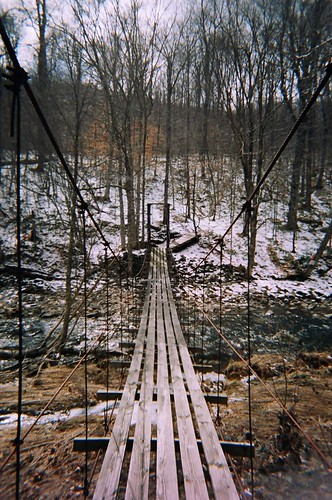
From a hike in the Catskills in late March.

Carnival of the Feminists Includes Me

The 17th Carnival of the Feminists is up at Bitch Lab, and yours truly has a piece published there. It's called "Appetites" and I reproduce it here.

The 18th Carnival of the Feminists will be held at Ink and Incapability. Check out the call because, while the topics are wide open, there are also some intriguing possibilities for essays.

Appetites


I was at the mall last night. I loathe the mall, and yet, I find myself there fairly frequently. The village where I live has no pharmacy, nothing other than a small convenience store that charges convenience store prices. So all necessities come from the mall and the large grocery store next to it. Thus, my position at a table in the Food Court, eating Subway sandwiches with my daughter for our late dinner.

As usual, I was people watching. The college students are gone, flown like robins in reverse. They’ll return in the waning days of summer, and change the character of this area. Last night, it was locals. And I started noticing something. Virtually everyone was carrying around extra weight. Lots of belly fat. Some of them were so slowed up by the extra weight that they lumbered. I started looking for lean people. There were a few, but as a percentage, it was less than 20 percent.

I know that we’re engaged in a national crisis over American obsesity. We blame television, and our sedentary lifestyles, and the availability of cheap, high-fat food. We drink too much soda. We eat too much candy and potato chips and fast food. We don’t exercise. It’s all our fault. We’re the richest nation on earth and we’re a bunch of slobs. Blah Blah Blah.

I’d like to offer some thoughts.

I have been re-reading Caroline Knapp’s brilliant book: Appetites: Why Women Want. In it, Knapp (who died way too young at 42 of cancer) wrote of women’s appetites: for food, for sex, for material goods. She did not condemn desire. Rather, in a complex argument that I’m treating schematically here, she looked at how desire is twisted in our culture. For white, middle-class women especially, (and Knapp admits that her observations/experiences are based on her own position as white and middle class) thwarted desire lies at the heart of many of our cultural maladies.

It is the illusion of choice that thwarts the desire. It is the illusion that a well-educated, intelligent white woman is going to have access to real power in this culture that ultimately turns desire in on itself, twists it, cripples it, so that the thwarted desire becomes the source of suffering. In a way, it’s the Noble Truths of Buddhism. In another way, it’s what it’s like to be told you have power in America when you do not.

And Knapp argues that for women, who despite the seeming accommodations made for women’s liberation by the powers that be, are especially affected by this thwarted desire. As I said, she’s writing as a white, middle-class woman, and how this thwarted desire manifests itself in other groups of people is not in her expertise. But her argument spoke to me.

Knapp was an anorexic. In a way, this provokes a “ho hum” reaction in me. After all, just how many more books do we need to read about white anorexia? But this book spoke to me because I also have an eating disorder. I’ve made no secret of the fact that I’ve dealt with bulimia for the last several years. I thought it was a thing of the past. But the past few months, when I’ve been cloistered in a cave of depression, the bulimia called to me. And sometimes, I answered that call.

It’s embarrassing to admit. What sane, dignified, intelligent person wants to admit that sometimes, after eating a meal, or a bar of chocolate, or an ice cream sundae, she would stick her finger down the back of her throat and vomit? Especially one who is the mother of two daughters and who is desperate for them to not emulate that kind of behaviour? I found ways of being secretive about it, including going outside and vomiting in the backyard, away from the house. In the dark. Alone. So no one could see. It wasn’t a full-scale relapse. But it happened often enough that I could smell relapse in the miasma of my own vomitus.

My depression has been fueled by a few things. Basic brain chemistry, for one. My genetic line on both sides of my family condemn me to craziness of various stripes. I am beyond grateful that my brain chemistry can be treated with drugs, and I no longer worry about the fact that I have to take antidepressants. Illness is illness. But on top of the brain chemistry has been a situational depression. All of it fueled by utter powerlessness. It ranges from the national—I live in a country run by people from whom I feel completely alienated—to the more personal—my job bores the bejesus out of me for reasons that are too lengthy to go into here. And, added to that is the constant worry, as a single mom, that I am literally a single paycheck away from not being able to feed my children. It’s a potent combination, and there have been many days in the past three months where that combination has knocked me on my ass. Or, knocked me to my knees, bending over a toilet.

I will tell you one more thing before I get back to those folks at the mall. Every time I threw up in the past three months, I was entirely conscious of what I was doing. The conversation went something like this: “Throwing up is not going to solve your problems.” And the response in my head was always something like, “Fuck you. It’s going to make me feel better.” In a situation where I cannot seem to move myself out of the position I’m currently in, the fact that I could manipulate my body endorphins, exercise control over my food intake, hurt myself, was moving myself. It was power. False power. But power nonetheless.

So, I look around and I see a lot of folks who are obese. And I found myself wondering why there has been such a growth of obesity in the past couple of decades. And all the reasons in the third paragraph still apply.

But I think there is another facet to all of this. We, as a nation, do not know how to make ourselves feel better. We do not know how to move ourselves out of the positions that the vast majority of us find ourselves in. We have been gradually stripped of our power. We cannot afford to buy the toys that we could that distracted us. When I was a kid, many, many people had RVs, and boats, and a new car every year. Middle class folks. But the middle class is drowning, and the poor, well, the poor are long underwater.

So, what do we have? We have food. Cheap, fattening, sweet food. And our televisions. The solace of food is what many of us give ourselves because we have nothing else. We can see what we want: it’s there on our television sets every night. Taunting us. But we cannot have it. We send our children off to fight in an unjust war. We work our barely-getting-by jobs. We struggle to make ends meet. And we eat. It doesn’t change anything. But for those moments when that sweetness is on our tongues, we feel better in our powerlessness.

Wednesday, June 21, 2006

Fundamentalism (again)

hb_19.73.209Those of you who've schlepped through my posts before know that I tend to focus my attention on certain issues. Fundamentalism scares the bejesus out of me, for example, and I've been known to pick at it a time or two.
So, imagine my delight when I came across this article today. "The four fundamentalisms and the threat to sustainable democracy" by  Robert Jensen presents a provocative argument that it is not just religious fundamentalism, but a variety of fundamentalisms that create a threat to sustainable democracy here in the United States.
Let's start by defining fundamentalism. The term has a specific meaning in Protestant history (an early 20th century movement to promote "The Fundamentals"), but I want to use it in a more general fashion to describe any intellectual/political/theological position that asserts an absolute certainty in the truth and/or righteousness of a belief system. Such fundamentalism leads to an inclination to want to marginalize, or in some cases eliminate, alternative ways to understand and organize the world. After all, what's the point of engaging in honest dialogue with those who believe in heretical systems that are so clearly wrong or even evil? In this sense, fundamentalism is an extreme form of hubris, a delusional overconfidence not only in one's beliefs but in the ability of humans to know much of anything definitively. In the way I use the term, fundamentalism isn't unique to religious people but is instead a feature of a certain approach to the world, rooted in the mistaking of very limited knowledge for wisdom.

It's funny that Jensen uses the term hubris. I tend to reserve the term as that which applies to people I consider tragic heroes, the classical sense of the term, where the one flaw (and it's always fatal) is to have pride great enough that one thinks one is better than the gods. For that, people are made to suffer, To be struck down.


While I agree with Jensen in principle, I think the word I would use is "narcissism." The sense that it's all about me. My interpretation. My beliefs. That I should always get my way, and I'm going to make you suffer in order to bring you around to that point of view. And, as part of that, I'm going to intepret a text or a word in the ways I see fit.


The antidote to fundamentalism is humility, that recognition of just how contingent our knowledge about the world is. We need to adopt what sustainable agriculture researcher Wes Jackson calls "an ignorance-based worldview", an approach to world that acknowledges that what we don't know dwarfs what we do know about a complex world. Acknowledging our basic ignorance does not mean we should revel in stupidity, but rather should spur us to recognize that we have an obligation to act intelligently on the basis not only of what we know but what we don't know. When properly understood, I think such humility is implicit in traditional/indigenous systems and also –the key lesson to be taken from the Enlightenment and modern science (a contentious claim, perhaps, given the way in which modern science tends to overreach). The Enlightenment insight, however, is not that human reason can know everything, but that we can give up attempts to know everything and be satisfied with knowing what we can know. That is, we can be content in making it up as we go along, cautiously. One of the tragedies of the modern world is that too few have learned that lesson.


Here, I agree. I've talked before about my fear of control freaks: those people who are so afraid of things being out of their control that they set out to control all of us. To make us comply with what makes them feel safe. And, once again, that's a type of narcissism. And it's fear. I think, at its heart, it's about the fear of the greatest thing out of our control: death.


Death comes to all of us. You're going to have to take my word on this, even though I know there are people out there (not necessarily anyone here on this site) but certainly, members of this administration, who I swear think that they can make some kind of Faustian bargain, can unlock the secret to eternal life if they just control-freak their way over the rest of us. (Are you listening George, Dick, and Donald? Death is coming for you, and there's not a damn thing you can do about it. But I will tell you one thing: killing Iraqis and American soldiers is not the bargain that Mephistopheles is looking for. That's fucking garden-variety bargaining. Get some imagination.)


And so, Jensen identifies four varieties of fundamentalism that he sees as especially inimical to democracy: religious, economic, nationalism, and technological fundamentalism. His arguments for each of these is compelling, and I invite you to read the article in full.


One of my favourite parts of the article is his discussion of economic fundamentalism, especially this quotation:

In other words, economic fundamentalism - the worship of markets combined with steadfast denial about how the system actually operates - leads to a world in which not only are facts irrelevant to the debate, but people learn to ignore their own experience.


Capitalism is a funny thing: market fundamentalism teaches us that we would all be better off if we all have an opportunity to make it based on our own merits. That if we work hard enough, and are clever and talented enough, we'll "make it afterall." But certainly my experience--as an over-educated, single, divorced mother tells me something completely different. And so which am I to believe? The ideology or the reality? And is my reality your reality? And if, in fact, experiences differ among us, as we know they do, how then can there be a fundamentalist adherence to an economic system that doesn't work for the majority of us?
After Jensen has reviewed the four types of fundamentalism, he turns to his suggestions for future resolution of the problems. And, like a good anti-fundamentalist, he doesn't claim any one answer as the gold standard. He does, nevertheless, end the article on a note of hope. It's not a false hope, the kind born of "happily ever after" or "the sun will come out tomorrow." It's rather the hope that I always admire, that kind of Camusian hope that life is fucking hard, and yet we prevail. We don't get what we want, but what comes to us can be enough. That sometimes, the monsters do come in the middle of the night, but they can be faced down and sent on their way. That there doesn't have to be just one way of looking at things. That all things are possible, even if all things will not be.


And I can live with that.